


Building an Embedded Vision System
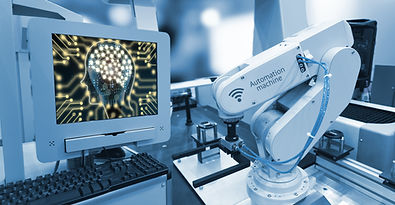
Modern intelligent devices increasingly rely on cameras to collect and interpret visual information in real time. From autonomous robots and industrial inspection systems to automotive platforms and smart cameras, embedded vision systems allow machines to understand their surroundings without relying on external computers or cloud processing.
Building an embedded vision system requires careful integration of multiple components, including the camera module, image processing pipeline, embedded hardware, software, and AI algorithms. Each part of the system must be optimized to achieve the required balance of image quality, performance, power consumption, and reliability.
Understanding Embedded Vision Systems
An embedded vision system is a complete imaging platform that captures, processes, and analyzes visual data directly on an embedded device. Unlike traditional camera systems that send images to a separate computer, embedded vision systems perform processing locally using dedicated processors, GPUs, or AI accelerators.
A typical embedded vision system includes:
-
Camera module
-
Image sensor and lens
-
ISP pipeline
-
Embedded processor or AI accelerator
-
Computer vision software
-
Application-specific algorithms
The combination of these components enables real-time image analysis for tasks such as object detection, inspection, navigation, and automation.
Defining System Requirements
The first step in building an embedded vision system is understanding the requirements of the application. Different applications require different combinations of imaging performance, processing power, and hardware capabilities.
Important factors to consider include:
-
Required image resolution
-
Frame rate
-
Operating environment
-
Lighting conditions
-
Processing requirements
-
Power limitations
-
System size constraints
For example, an industrial inspection system may prioritize high resolution and accuracy, while a robotics application may require low latency and fast image processing.
Defining these requirements early helps determine the appropriate camera, processor, and software architecture.
Selecting the Camera Module
The camera module is one of the most important components of an embedded vision system because it determines the quality of the input image data.
Camera selection involves evaluating:
-
Image sensor performance
-
Lens characteristics
-
Interface type
-
Shutter technology
-
Low-light capability
-
HDR performance
Applications involving fast motion may require global shutter sensors to prevent image distortion, while outdoor systems may require HDR sensors to handle changing lighting conditions.
The camera interface must also match the embedded platform. Common interfaces include MIPI CSI-2, USB, GMSL, and GigE Vision depending on the application.
Choosing the Embedded Processing Platform
The processing platform determines how quickly and efficiently the system can analyze image data. Modern embedded vision systems use a combination of CPUs, GPUs, and AI accelerators to handle demanding workloads.
Common embedded platforms include NVIDIA Jetson, Qualcomm Snapdragon, NXP i.MX, MediaTek, and other AI-enabled processors.
The correct platform depends on factors such as:
-
AI model complexity
-
Number of camera streams
-
Required frame rate
-
Power consumption
-
Software compatibility
For example, Edge AI applications may require GPU acceleration for deep learning inference, while simpler vision applications may only need a lightweight processor.
Developing the Image Processing Pipeline
Before image data can be analyzed, it must be processed and optimized. The Image Signal Processor (ISP) converts raw sensor data into a usable image by applying corrections and enhancements.
Important ISP functions include:
-
Auto Exposure (AE)
-
Auto White Balance (AWB)
-
Color Correction Matrix (CCM)
-
Noise Reduction
-
HDR Processing
-
Lens Shading Correction
-
Gamma Correction
Proper ISP tuning is essential because computer vision algorithms depend on consistent and high-quality image data. Poor image quality can reduce the accuracy of object detection, classification, and AI models.
Integrating Computer Vision and AI Algorithms
After image processing, the system uses computer vision or AI algorithms to interpret the image data. These algorithms allow the system to identify objects, analyze scenes, and make decisions.
Common embedded vision tasks include:
-
Object detection
-
Image classification
-
Object tracking
-
Facial recognition
-
Defect detection
-
Navigation
Many modern embedded vision systems use deep learning models optimized for edge devices. These models are designed to run efficiently while maintaining high accuracy.
Software Development and Optimization
Software integration is a critical part of embedded vision system development. Engineers must ensure that the camera drivers, image processing pipeline, AI models, and application software work together efficiently. Software development may include:
-
Camera driver integration
-
Image processing optimization
-
AI model deployment
-
Hardware acceleration
-
Real-time application development
Optimization is especially important for embedded systems because they operate with limited power and computing resources compared to desktop computers.
Testing and Validation
Before deployment, embedded vision systems must be tested across different operating conditions to ensure reliability and performance.
Testing typically includes:
-
Image quality evaluation
-
AI accuracy testing
-
Processing speed analysis
-
Thermal testing
-
Power consumption testing
-
Environmental validation
Real-world testing is especially important because lighting conditions, motion, and environmental factors can significantly impact system performance.
Applications of Embedded Vision Systems
Embedded vision systems are used in many industries where real-time visual intelligence is required.
Robotics systems use embedded vision for navigation, object recognition, and autonomous decision-making. Industrial automation uses vision systems for inspection, quality control, and manufacturing optimization. Automotive applications rely on embedded vision for ADAS, driver monitoring, and autonomous driving features. Smart cameras and Edge AI devices use embedded processing to perform analytics locally with reduced latency and improved privacy.
Conclusion
Building an embedded vision system requires the integration of multiple technologies, including camera hardware, image processing, embedded computing, and AI software. Each component must be carefully selected and optimized to achieve reliable real-time performance.
A successful embedded vision system depends on more than just a high-resolution camera. Proper sensor selection, ISP tuning, hardware integration, and software optimization are all essential for creating a system that can accurately interpret visual information.
As AI, robotics, automotive, and industrial automation continue to advance, embedded vision systems will play an increasingly important role in enabling smarter and more autonomous technologies.